

How to Build Healthy Eating Habits in School-Age Kids
Your child has a short list of foods they’ll actually eat, and everything else is a battle. You put something new on the plate and it gets pushed away before they’ve even tried it. Some nights it’s already late, everyone’s tired, and you make the nuggets because it’s just not worth the fight.
If you’ve tried rules, rewards, and reason to build healthy eating habits and nothing is working — there’s a different approach. One that starts with how kids this age actually learn.
If you’re looking for a practical way to build healthier eating habits without food battles, there’s a guide that goes with this article. Moments That Build Healthy Eaters — a free, practical framework you can start using today.
Why Telling Kids to “Eat Healthy” isn’t Working
You’ve explained why vegetables are important. You’ve said no to the third bag of chips.
And you have already tried the “just one bite” rule, the reward chart, and the bribery at the dinner table.
Yet somehow you’re still having the same conversation. It’s exhausting.
School-age kids, especially tweens, often push back when they’re told what to do. Over-emphasizing healthy eating can turn food into a fight about control rather than a conversation about anything useful.
They’re also navigating a lot of competing input — what their friends eat at lunch, what they see online, and what gets marketed to them constantly. A conversation about nutrition is working against a lot of other influences.
If Mealtimes Have Turned Into a Power Struggle
The battle itself is part of the problem.
Though well-meaning, pressure at the table tends to backfire. When children are pushed to eat — whether through “just three more bites,” using dessert as leverage, or simply the tension of a parent watching and waiting — the food being pressured becomes something to resist rather than try.
If you’re dreading the back-and-forth at dinner, you’re not alone — there are approaches that can help.
What Actually Helps Kids Build Healthy Eating Habits
Involve Your Child in Food Choices and Preparation
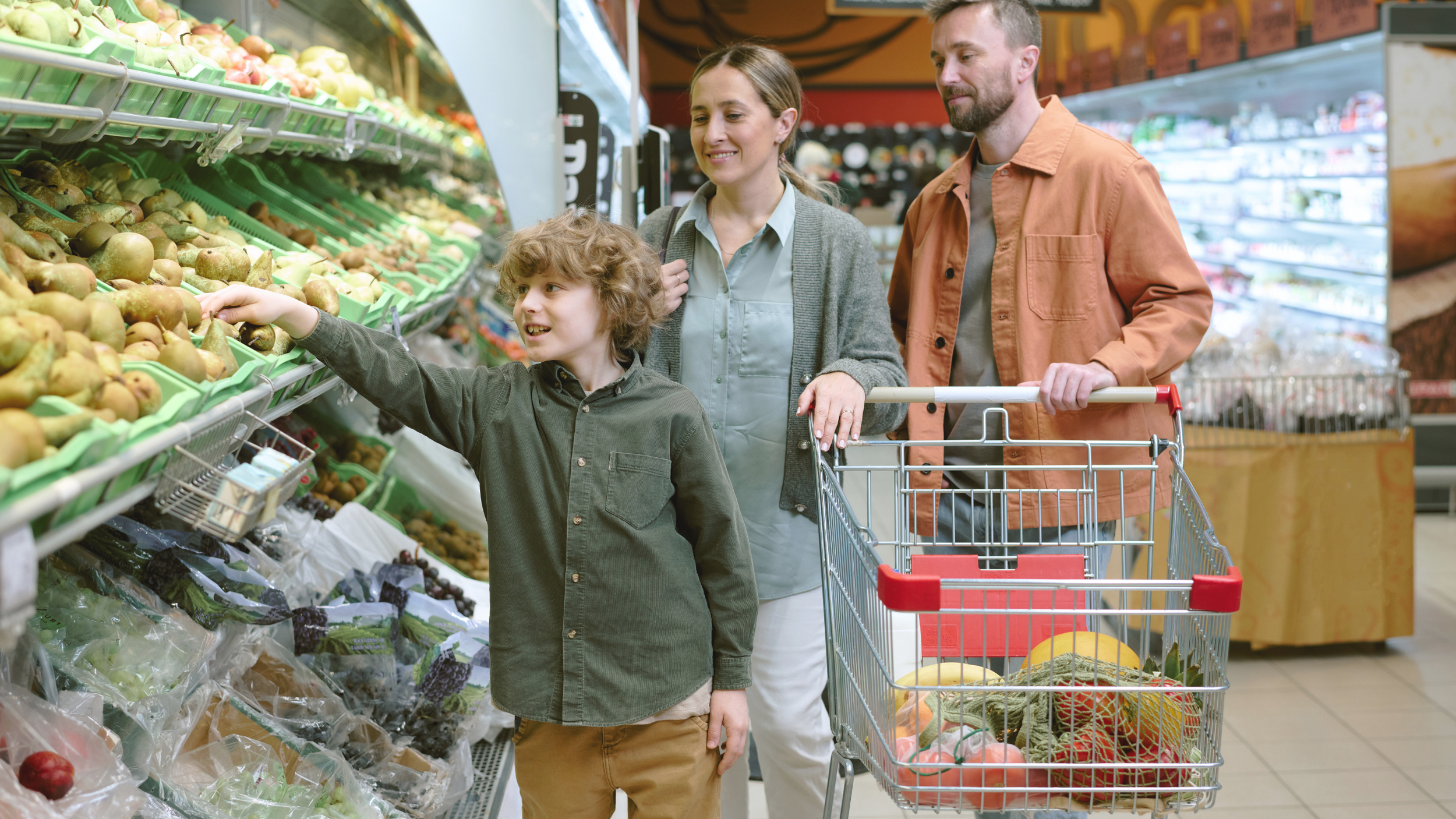
At the store, show them how to pick produce or compare nutrition labels: find the serving size first (it controls everything else), then look at added sugars and fiber. “Which cereal has less added sugar per serving?”
Make meal plans together. Let them explore cookbooks and write down recipes they would like to try.
In the kitchen, give them real tasks — washing vegetables, measuring, stirring, and simple chopping with supervision.
Practice measuring out serving sizes so they can visually see what one serving actually looks like. They can pour one serving of cereal or scoop one serving of rice, then compare it to what they would normally take.
Grow a small herb on the windowsill and let them add it to dinner.
Kids who help make food are more willing to try it.
Create a Home Environment That Supports Healthy Eating
Think about what your child reaches for when they walk in the door after school. Whatever is out and easy is often what gets eaten. A little prep at the start of the week — portioned snacks somewhere they can reach without asking — takes a lot of pressure off the weeknight.
Regular meal times can also help when possible — predictability makes it easier for kids to recognize when they’re hungry.

Eating together when you can, even occasionally, is a reliable way kids get exposure to new foods.
Serving food family style lets your child choose what goes on their own plate. And letting them help make the food, even in small ways, means they’re more likely to eat it.
On language: Labeling foods as "Good" and "bad" can create guilt around them. Try describing them as "Everyday foods" and "sometimes foods" instead.
On rewards: Try to avoid using food as reward or punishment — "If you eat your vegetables, you can have dessert" — teaches that vegetables are the obstacle to the good food. Keep food and behavior separate — it protects the relationship your child is building with eating.
Why Repeated Exposure Helps Kids Accept New Foods
Most parents stop offering a rejected food after a handful of tries. For many kids, it takes seeing a food repeatedly before they'll touch it. Keep serving it alongside foods they will eat, without a confrontation when it gets pushed aside. Progress is slow and won't always be visible — until one day they just try it.
Note: This applies to kids who refuse food because it’s new or unfamiliar. If your child gags with certain textures or has extreme reactions to specific smells or appearances, bring it up with your pediatrician — they can help you figure out the best next steps.
Model the Eating Habits You Want Your Child to Learn
At this age, kids are building their own sense of what a normal relationship with food looks like — and you’re still one of their clearest references for that.
How you talk about your body is what they learn to say about theirs. When you notice that what you ate made you feel more energetic, focused, or just off, say it out loud. Those casual observations, shared over time, are how your child starts making the same connections.
The approach that works at this age is less about saying the right things and more about what they actively practice and what they see you do.
You may have grown up in a household where food was loaded with rules, or where bodies were criticized, or where eating was complicated in ways you’re still sorting out. Many of us are still figuring out our own relationship with food. Don’t let that stop you. Your child is watching someone they trust navigate the same thing they’re learning.
When to Talk to Your Pediatrician About Picky Eating
If you’re worried about picky eating, bring it up with your pediatrician — they know your child’s growth curve and history in a way no article can account for.
Concerning patterns related to picky eating may include:
Losing weight, dropping off growth curve, or not gaining as expected
Missing entire food groups (no protein, no fruit/veg, no dairy) vs. selective within groups
Gagging, retching, significant distress at sight/smell of foods
Accepting very few foods overall
A Practical Companion
If it helps to have something you can refer back to, Moments That Build Healthy Eaters lays this out clearly — what to do at the store, at practice, and at the table.

You're not raising a child who eats perfectly.
You're raising a teenager who can pack their own lunch, a college student who can feed themselves, and an adult who has a healthy relationship with food.
Frequently Asked Questions
-
Generally, no. Pushing kids to finish everything can work against their ability to recognize when they're full. Serve reasonable portions, let them decide how much to eat from what's offered, and trust that a hungry child will eat.
-
No — but with a caveat. Making a separate meal every night removes any reason for a child to engage with what the family eats, and over time they have even less reason to try anything new. The alternative isn’t forcing them to eat what’s on the table. It’s making sure there’s always at least one thing at the meal they’ll eat — a side, something familiar — so they’re not sitting there with nothing. They’re at the table, they’re seeing the food, and the pressure is off.
Additional Resources
FDA Nutrition Education
How to Understand and Use the Nutrition Facts Label — Official guidance on reading labels, including serving size, added sugars, and fiber.
Nemours KidsHealth
Nutrition & Fitness Center for Parents — Well-organized, parent-friendly coverage of feeding challenges, picky eating, and nutrition by age.
USDA MyPlate
MyPlate for Families — A simple framework for balanced meals.
Medical Disclaimer: All PedsParent Network content is provided for informational and educational purposes only and does not constitute medical advice, diagnosis, or treatment. Use of this website does not establish a physician–patient relationship.
The information provided is not a substitute for individualized medical care. Always consult your child’s pediatrician or another licensed healthcare provider regarding any medical concerns or before making healthcare decisions. Never disregard or delay seeking medical advice because of something you have read on this website. For more information, please read our full disclaimer.